
01
Highly Affordable
One of the most affordable study destinations in the EU, with living costs as low as €350/mo.
Study destination
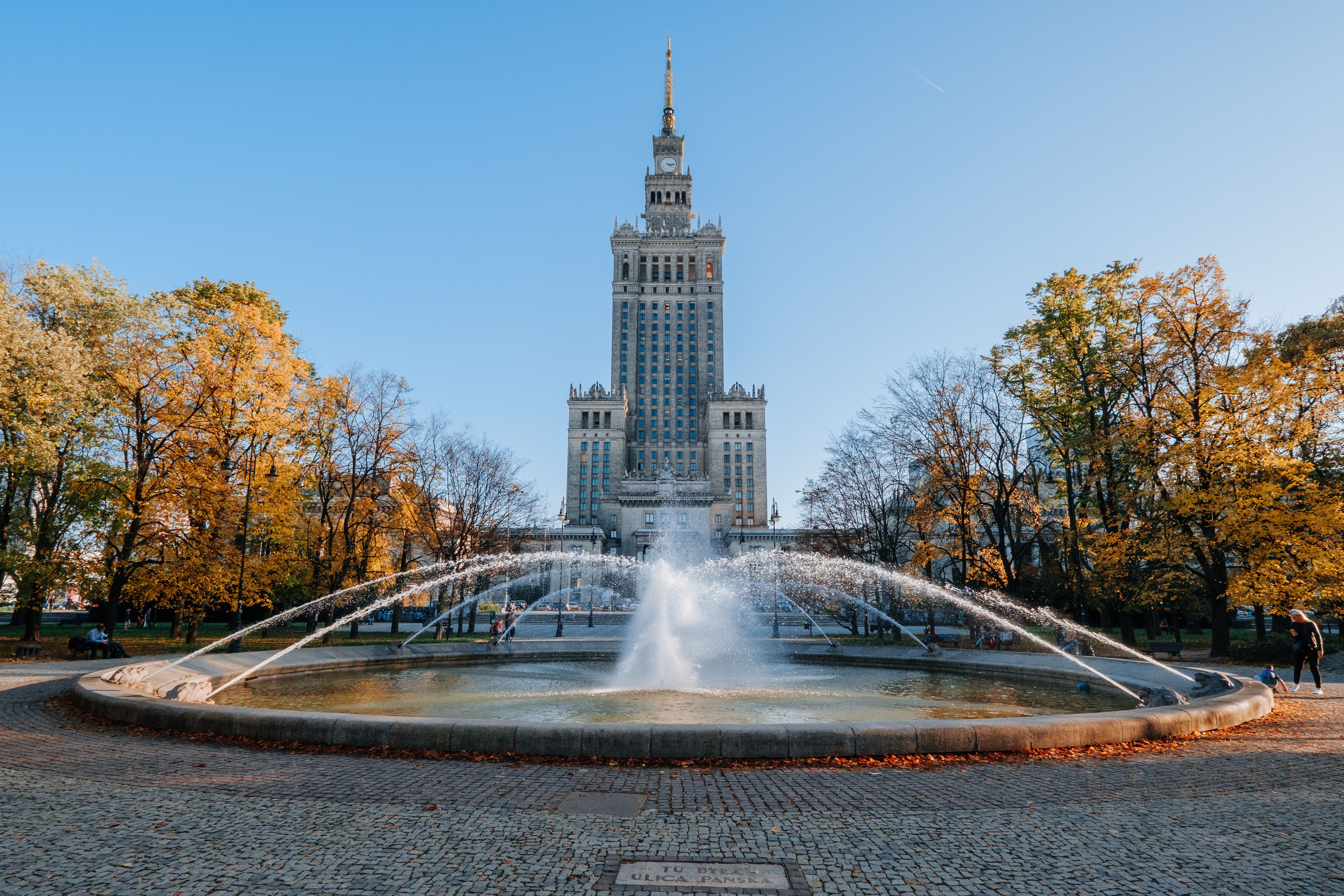
Poland, located at the heart of Central Europe, is one of the most culturally rich, safe, and student-friendly countries in the EU. With a vibrant student community and affordable living, Poland is an increasingly popular destination for international students.

At a glance
Everything you need to know about Poland before you start planning.
Why this destination
Discover the benefits of choosing Poland for your education.
One of the most affordable study destinations in the EU, with living costs as low as €350/mo.
Degrees are aligned with the Bologna Process, ensuring recognition across Europe and globally.
Over 1,200+ programs in Engineering, Business, IT, and Medicine are taught entirely in English.
As part of the Schengen zone, students can travel freely to 27+ countries.
Education system
The levels of education and how your work is graded.
First Cycle (Licencjat or Inżynier)
Second Cycle (Magister)
Integrated program for Medicine, Law, Architecture
Third Cycle advanced research
First Class / 4.0 GPA
Upper Second / 3.5 GPA
Lower Second / 3.0 GPA
Pass / 2.0–2.5 GPA
Fail / 0.0 GPA
Essential guide
Tuition, living costs, intakes and other essentials at a glance.
| Key aspect | Details |
|---|---|
| Annual Tuition Fees (Undergraduate) | €2,000–4,500 |
| Annual Tuition Fees (Postgraduate) | €2,500–5,500 |
| Estimated Monthly Living Costs | €400–700 (covers accommodation, food, transport, and utilities) |
| Part-Time Work Rights | Up to 20 hours/week during academic semesters, full-time during scheduled university vacations. |
| Post-Study Work Opportunity | Eligible graduates can apply for a Post-Study Work (PSW) or Job Seeker visa ranging from 1 to 3 years. |
| Main Admission Intakes | Primary intake in September/October (Autumn/Fall) and secondary intake in January/February (Winter). |
| English Proficiency Requirements | IELTS (6.0–6.5 average), TOEFL iBT (80–90+), or PTE Academic (58–65). Duolingo accepted by select universities. |
Entry requirements
Academic and English language requirements for international students.
| Program level | Academic requirement | English requirement |
|---|---|---|
| Foundation / Pathway | Class 12th (10+2) with minimum 50%–60% marks from a recognized board. | IELTS 5.0–5.5 / TOEFL 60 / PTE 45 |
| Undergraduate (Bachelor’s) | Class 12th (10+2) with minimum 65%–85% aggregate marks in relevant subjects. | IELTS 6.0–6.5 / TOEFL 80+ / PTE 58+ |
| Postgraduate (Master’s) | Recognized Bachelor’s degree with 60%–75% aggregate marks (First/Second Class). | IELTS 6.5–7.0 / TOEFL 90+ / PTE 65+ |
| Doctoral (PhD / Research) | Master’s degree in a relevant discipline with strong research proposal and faculty mentorship. | IELTS 6.5–7.0+ / TOEFL 95+ / PTE 68+ |
Institutions
Understanding the different kinds of universities and colleges available.
State-funded, highly reputed institutions.
Focused on engineering/applied sciences or specialized medicine, pharmacy, and health.
Often more flexible with modern curriculums (e.g. Kozminski, SWPS).
Funding
Financial aid opportunities for international students.
Programs like Banach and Poland My First Choice offer full tuition + living allowances (approx. PLN 1,700/mo).
EU funded €850 to €1,200/month stipend for exchange or joint-degree students.
€2,300 per semester for students from Visegrad Group and partner countries.
Up to 100% tuition waivers at universities like Kozminski, Warsaw, and AGH.
PhD students in Doctoral Schools often receive FREE education + a monthly stipend (PLN 2,300–3,500).
Intakes
Admission cycles for international students in Poland.
The main intake offering the maximum number of course options and easier access to scholarships.
Best for: Almost all bachelor's, master's, and PhD programs.
Limited number of programs available, mostly in business, IT, and engineering.
Best for: Students who missed Fall deadlines or want a faster turnaround.
Top universities
Leading universities in Poland, ranked by the QS World University Rankings.
| Rank (QS) | University | UG fees / year | PG fees / year | Popular courses |
|---|---|---|---|---|
| #262 | University of Warsaw | €2k–€5k/yr | €2k–€5k/yr | Law, Economics, IT |
| #293 | Jagiellonian University | €2.5k–€6k/yr | €2.5k–€6k/yr | Medicine, History, Biotech |
| #501-510 | Warsaw University of Technology | €2.5k–€4k/yr | €2.5k–€4k/yr | Engineering, Robotics |
| #801-850 | AGH University of Science & Tech | €2k–€4k/yr | €2k–€4k/yr | Mechatronics, Mining |
| #801-850 | Gdańsk University of Technology | €2k–€4k/yr | €2k–€4k/yr | AI, Software Engg |
| #701-710 | Adam Mickiewicz University | €2k–€3.5k/yr | €2k–€3.5k/yr | Philology, Humanities |
| #901-950 | Wrocław University of Science & Tech | €2k–€4k/yr | €2k–€4k/yr | Computer Science |
| Top 60 EU | Kozminski University | €6k–€9k/yr | €6k–€9k/yr | MBA, Finance |
| - | Medical University of Warsaw | €10k–€13k/yr | €10k–€13k/yr | MBBS, Dentistry |
| - | Medical University of Gdańsk | €11k–€13k/yr | €11k–€13k/yr | Medicine, Nursing |
*Fees vary by course. Tuition fees are per year for international students.
Admission requirements
What you need to apply to universities in Poland.
Apply: February to July. Start: October.
Apply: September to November. Start: February/March.
Apply early for visas! Allow at least 4-6 weeks before the course start date.
Careers
High-demand sectors and the work options open to you after graduation.
International graduates can apply for a TRP extending their stay up to 1 year to seek employment.
€12k–€24k/yr (Entry)
€10k–€20k/yr (Entry)
€9k–€18k/yr (Entry)
€15k–€25k/yr (Entry)
€7k–€12k/yr (Entry)
Permanent residency
International students can easily transition to permanent residency and eventually citizenship in Poland.
Enter on a National D Visa or TRP. You can work full-time during studies with a TRP.
After graduation, apply for a 1-year TRP to remain in Poland and find employment.
Once employed, apply for a Work Permit or EU Blue Card to continue residing.
Eligible after 5 years of continuous legal stay. Requires stable income and A2 Polish language.
Eligible after 10 years of legal residence. Requires B1 Polish language proficiency.
Visas
A quick overview of the visas international students use.
| Visa type | Purpose | Work allowed? | PR pathway? |
|---|---|---|---|
| National Visa (Type D) | Full-time studies | 20 hrs/wk (Full-time breaks) | Up to 1 year |
| TRP (Student) | Extended stay for studies | Full-time | 1–3 years |
| Post-Study Visa | Job search after studies | No (Until employed) | Up to 1 year |
| Work Permit / EU Blue Card | Full-time employment | Full-time | 1–3 years (Renewable) |
| Short Stay (Type C) | Tourism / short courses | No | Up to 90 days |
Free counselling
Share a few details and a Dreams International advisor will call you back to map out universities, budget, intakes and visa — one honest conversation, no obligation.
Our study abroad advisors will connect with you shortly.